Sonntag, 10. August 2008

Trek to Valle de Lares 3 - Camping at 4000m

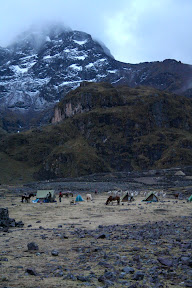
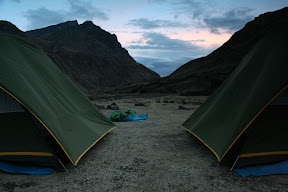
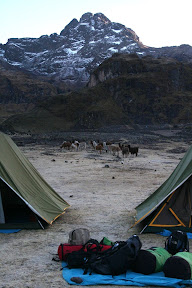
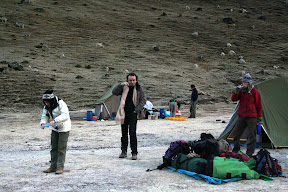
Right, so our camp was nicely pitched near the head of the valley by the time we arrived.


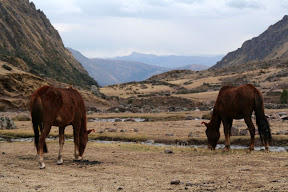
Horses were grazing...


... tourists were making fools of themselves...


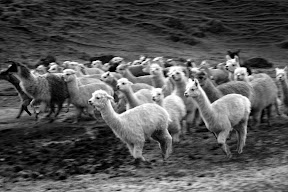
...Llamas were galloping home...


...and the snow-capped mountains looked down with contempt at our feeble protection.


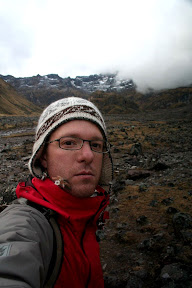
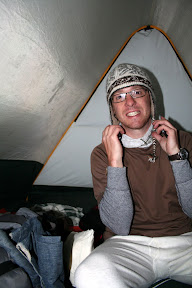
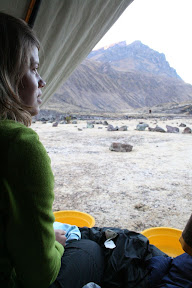
Well, how would you feel if someone decided to snap away merrily whilst you were changing into your longjohns?


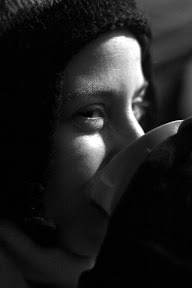
Warm beverages provided in the dining tent...


... low oxygen levels made some light-headed...


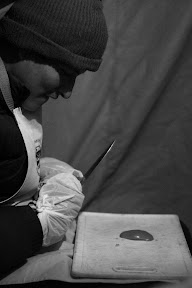
...whilst others were busy cooking protecting their hands from the corrosive influence of hot peppers.


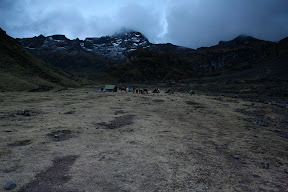
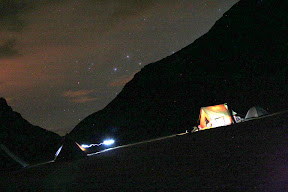
It was so cold at night, that I couldn't find the patience to look for a level piece of rock for a nighttime picture. Stars were disappointingly hidden behind a veil of clouds.


Getting up in the morning: hot mate de coca brought out to your sleeping bag and basins with warm water (not for long in these temperatures) laid out for a quick wash.


Llama herds on their way to their pastures in the morning.


Sissies! Real trekkers stink!

Trek to Valle de Lares 2 - climb to first camp

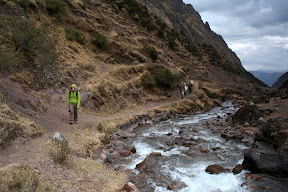
Still on Day 1 of the trek, we headed into chillier climes, ever upward along the valley.


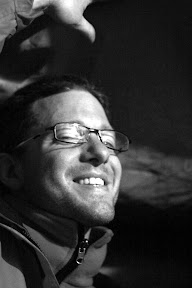
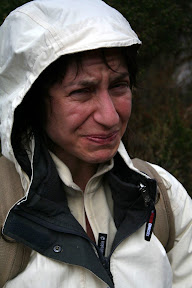
The instructions were to "make the face you just did when chewing the coca leaves"


The clouds seemed to close in as we climbed higher.


Not much in the way of crops was planted here. Maize would only grow further down and papas (potatoes) were planted closer to settlements - all the way up steep hillside as high as 4000m!


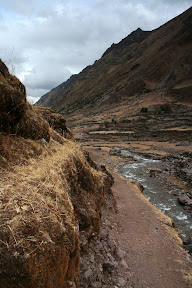
Looking back toward the lower part of the valley we had followed.


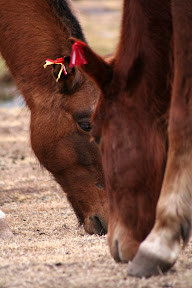
Horses everywhere you looked, their owners marking them as their property with little coloured ribbons on their ears


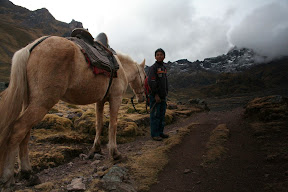
Our "ambulance driver" on the first day.


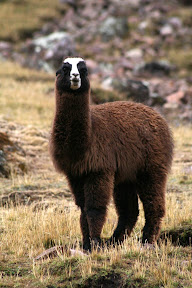
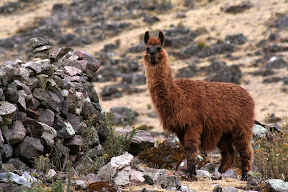
The first Llama of the day! They have a perpetually startled air about them and shy away from human presence... well they shied away from me, at least.


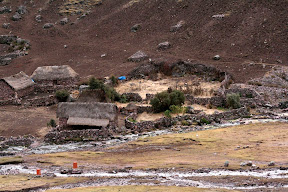
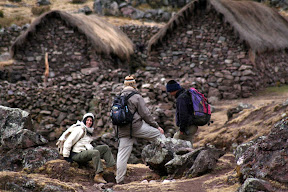
One of the houses and enclosures of the village of Cancha Cancha; the nearby mountain and stream were also called Cancha Cancha on account of those enclosures. Sometimes a soccer stadium will also be referred to as a cancha.


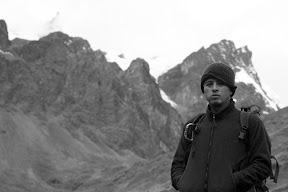
Our guide Fernando spoke very good English, although we mostly insisted on Spanish.


The soil became drier, the air thinner and colder.


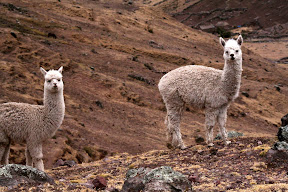
Young Llamas along the way.


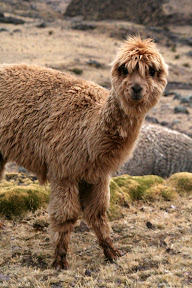
The thing that looks like a cross between a Sesame street puppet and a me on a bad hair day was equally startled at our presence.


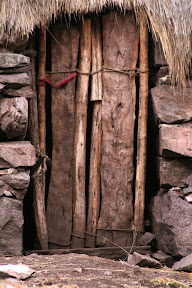
The door of one of the dwellings along the way. They build them airily.


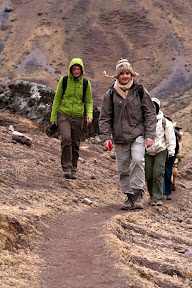
Rest stops became more frequent as we climbed


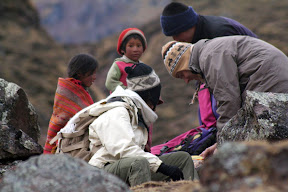
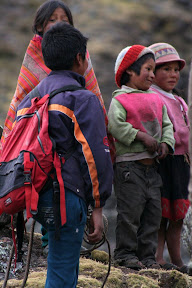
Small children soon found us and drew close to inspect us and ask for sweets.


They wore sandals, a T-shirt, some light woolen jumpers, the boys pants and the girls skirts, whilst we strode by dressed in oh-so-many layers of fleece and goretex.


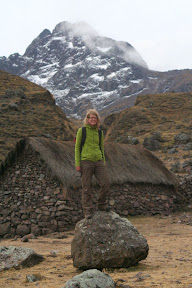
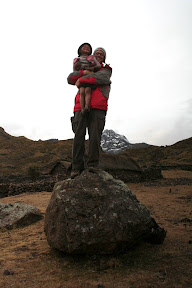
Sarah obliged my fanciful ideas of what pictures should be taken and proceeded to climb a small rock... for no good reason.


People keep laughing at me when I lay down on the ground to take pictures from unusual angles... oh, well at least it looks good-natured!


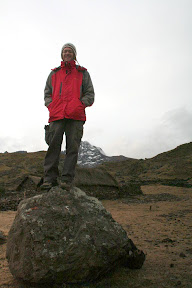
King of the world...


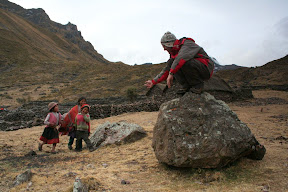
...or evil sorcerer, enticing little children...


...to come into my arms?


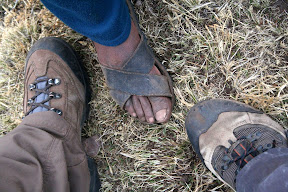
I still cannot believe 90% of the local people wear sandals for walking... when temperatures drop down to -5 degrees!


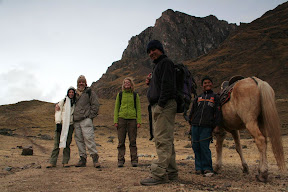
About to arrive in the valley where we would have our night's rest.

Samstag, 9. August 2008

Trek to Valle de Lares 1 - the warm part

As with everything else, we'd planned well and were overtaken by events as far as this trek was concerned. Originally scheduled for 4 days, we left a day late due to Sarah's being laid low by a stomach bug.

"Glueck im Unglueck", we were able to find 2 more people to go trekking with us on account of that delay.
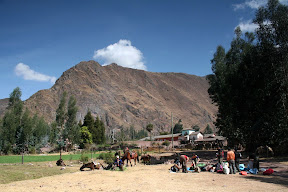


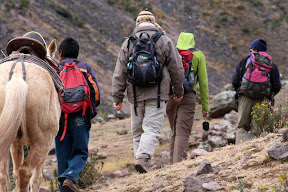
Ours was an expensive trek and one that was accompanied by a huge amount of logistics, compared to the 3-day affair to Ingapirca in Ecuador: 8 horses, 1 cook, 1 cooking tent, 1 latrine tent, 3 sleeping tents, 1 guide, 1 "ambulance" horse, 4 porters and arrieros... yep, we went out in style!
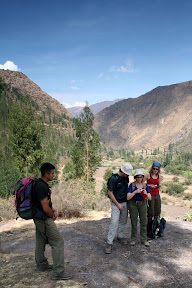


We'd picked this particular trek (Lares Valley) with this operator (Andina tours), since it had been recommended to us at South American Explorers. The trek was to be expensive, reliable, very well organised, free of crowds (as opposed to all the other treks to be booked from Cusco), comfortable, closer to nature and to the indigenas.
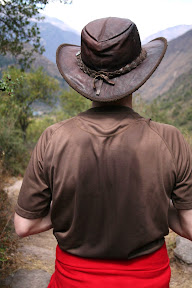


The first couple of hours toward the hamlet of Cancha Cancha were relatively warm, bathed in sunlight with a steady climb.
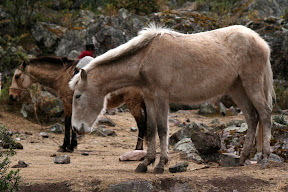


Horses abounded in the lower parts of the valley we were travelling along. Most people here lived off maize culture in this region.
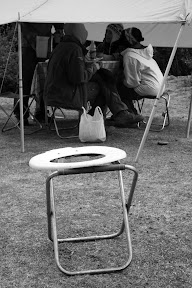


That's what an almuerzo (lunch) stop looked like for us: we'd get to the site and the arrieros would have pitched a tent under which we ate and another one for the latrine.
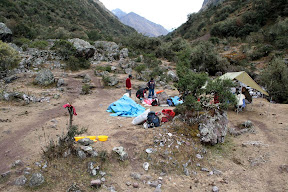


We'd started questioning the usefulness of such a luxury organisation when we'd booked the trip, however we learned that Andina Tours was investing quite heavily in local communities along the trek route - as far as hiring local helpers, paying for teachers' salary at the schools etc. Cutting any one part of the organisation out of the package would cut out one local person's income whereas his neighbour would still be in our employ.
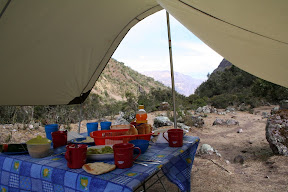


The almuerzo was light but muy rico - guacamole, bread, mate de coca, juice and fruit.
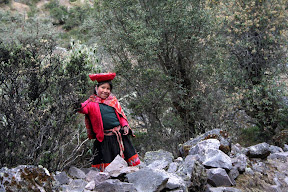


Somewhat shy but still smiling, this young girl was minding her flock of sheep in the valley.
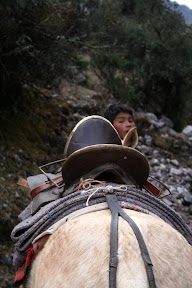


Our "ambulance" horse: just in case someone was affected by the altitude or just plain tired. Since we did cross a high pass at 4700m AMSL, the danger of altitude sickness was quite real.
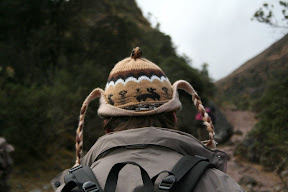


Every one of us had an Andean bonnet, but only Benjamin managed to wear it with such panache
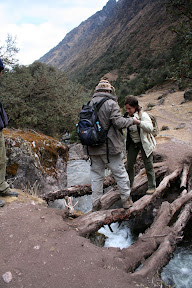


Crossing the little stream that travelled the length of "our" valley.
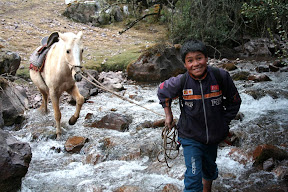


That's the way real men cross a creek: barefoot and pulling a horse.
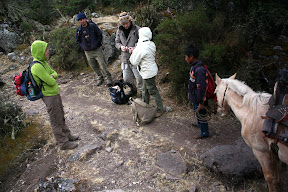


At this point, things became distinctly chilly, making it necessary to kit up and break out the coca leaves (for some).